
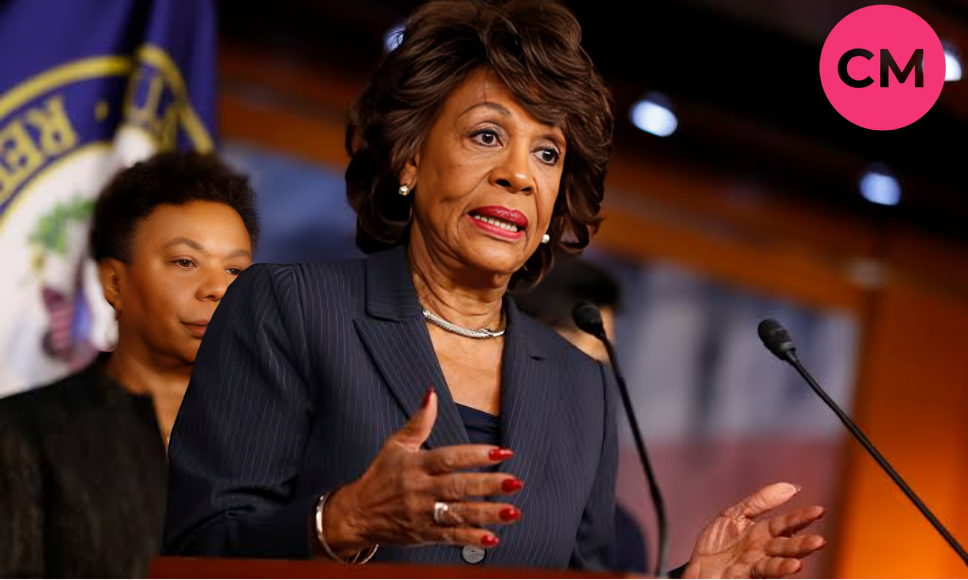

Who Is Maxine Waters?
Maxine Waters is the U.S. Representative for California’s 43rd Congressional District, a seat she has held since 1991. Born August 15, 1938, in St. Louis, Missouri, she is currently serving her 18th term in the House and is the ranking member of the House Financial Services Committee. Before Congress, she spent 14 years in the California State Assembly.
If you’re trying to get a straight answer on where she stands today, this article pulls together her career timeline, current committee role, and re-election status in one place, something surprisingly hard to find as a single, current source.
A Career That Started Long Before Congress
It’s easy to think of Maxine Waters purely as a Washington figure, but her path there took a couple of decades and a lot of ground-level work first.
She was born the fifth of 13 children, raised by a single mother in St. Louis after her father left the family when she was two. She started working at age 13, first in factories and segregated restaurants, then later in Los Angeles garment factories and as a telephone operator after her family relocated there in 1961. In 1966, she landed a job as an assistant teacher with the Head Start program in Watts, work that put her directly in contact with the community she’d eventually represent in Congress.
She went back to school while working, earning a sociology degree from what’s now California State University, Los Angeles, in 1971. Two years later, she became chief deputy to a Los Angeles city councilman, a role that gave her a front-row seat to how local government actually functions before she ran for office herself.
That’s the part of her story that tends to get skipped in quick bios: by the time she reached the State Assembly, she’d already spent years doing the unglamorous groundwork that most political careers skip past.
From the California State Assembly to Congress
Waters was elected to the California State Assembly in 1976 and served there for 14 years. During that stretch, she pushed for the divestment of state pension funds from companies doing business in apartheid-era South Africa, a stance that put her on the front lines of one of the defining international human rights debates of the era.
In 1990, she won election to the U.S. House of Representatives, taking office in January 1991. She’s represented the same general area of Los Angeles ever since, though the district’s number has changed a few times due to redistricting, going from the 29th district, to the 35th, and now the 43rd. If you’ve ever wondered why older articles reference different district numbers for the same representative, that’s the reason.
Career Timeline at a Glance
| Year | Milestone |
| 1938 | Born in St. Louis, Missouri |
| 1961 | Moves to Los Angeles with her family |
| 1966 | Hired as assistant teacher, Head Start program, Watts |
| 1971 | Earns sociology degree, Los Angeles State College |
| 1976 | Elected to California State Assembly |
| 1990 | Elected to U.S. House of Representatives |
| 1997-1999 | Chairs the Congressional Black Caucus |
| 2019-2023 | Chair, House Financial Services Committee |
| 2023-present | Ranking Member, House Financial Services Committee |
What Her Current Committee Role Actually Means
Here’s where a lot of coverage gets murky. Waters chaired the House Financial Services Committee from 2019 to 2023, meaning she led it and set its agenda while Democrats held the House majority. When Republicans took control of the House after the 2022 midterms, her title shifted to Ranking Member, which is the top-ranking position for the minority party on a committee.
In practical terms, a Ranking Member doesn’t control the committee’s agenda the way a Chair does, but still holds real influence: shaping which issues get pushed, leading the minority party’s questioning during hearings, and serving as the lead voice for Democrats on financial regulation policy. If you see headlines calling her “Chairwoman,” that’s outdated, her current title has been Ranking Member since January 2023.
The House Financial Services Committee itself oversees banking, housing, insurance, and securities regulation, essentially the federal government’s main point of contact with the financial industry. It’s one of the more consequential committees in the House, which is part of why her role there tends to generate steady news coverage.
Legislative Record and Focus Areas
Based on her sponsored legislation, Waters’ work concentrates heavily in a few areas: finance and the financial sector, housing and community development, and international affairs, with smaller but consistent activity in health and education policy. Recent bills she’s introduced include the GUIDANCE Act, the DPA Transparency Act, and legislation aimed at closing loopholes in prudential banking standards, all reflecting her continued focus on financial oversight.
Over her time in the House, she’s missed a percentage of roll call votes that runs higher than the typical House member’s lifetime average. Vote-tracking sites don’t generally specify the reasons behind individual missed votes, which are commonly tied to things like medical absences, scheduling conflicts, or campaign travel, so it’s worth noting that a higher miss rate alone doesn’t tell the full story of a legislator’s engagement.
Ethics Scrutiny: A Fair Look
Any complete picture of Waters’ career should include the ethics questions that have followed parts of it, presented factually rather than as either an attack or a defense.
In 2004, reporting in the Los Angeles Times detailed that relatives of Waters, including her daughter and son, had done business over the preceding eight years with companies, candidates, and causes connected to her work, totaling more than $1 million. Waters’ response at the time was direct: she and her husband handled their business separately from hers.
She’s also appeared on watchdog group Citizens for Responsibility and Ethics in Washington’s list of members flagged for scrutiny in multiple years, and was named a “Porker of the Month” by Citizens Against Government Waste over a specific earmark request. Separately, a House ethics panel investigated her involvement in efforts to assist a bank during the 2008 financial crisis, a case that stretched on for years before eventually being resolved without a formal violation finding against her.
None of that erases the other side of her record, four decades in public office, a leadership role on one of the House’s most influential committees, and a consistent base of strong electoral support in her district. But a fair overview includes both threads rather than only the flattering one.
Where Things Stand for 2026
Waters has declared her candidacy for re-election to the 43rd District seat in 2026, with the primary scheduled for June 2 and the general election on November 3. Her current term runs through January 2027. As of now, general election challengers hadn’t been finalized following the primary, which is standard timing for a race still in its earlier stages.
Given that she’s typically won her district with more than 70 percent of the vote in recent cycles, it’s a seat that political analysts generally consider safely Democratic, though final outcomes always depend on the actual field of candidates and turnout.
Beyond the Title: Why “Aunty Maxine”
If you’ve spent any time on social media, you’ve probably seen her referred to as “Aunty Maxine,” a nickname that picked up steam among younger audiences, particularly after a viral moment during a 2017 congressional hearing. It reflects a reputation she’d already built over decades: blunt, unapologetic in committee hearings, and consistently vocal on issues involving housing, financial oversight, and civil rights. Whether you agree with her politics or not, that reputation for directness is one of the most consistently reported traits across coverage of her career.
FAQs
How old is Maxine Waters?
She was born August 15, 1938, in St. Louis, Missouri, making her 87 years old as of 2026.
What district does Maxine Waters represent?
California’s 43rd Congressional District, covering parts of South Los Angeles, including Watts, along with Gardena, Hawthorne, Inglewood, Lawndale, Lomita, and Torrance.
How long has Maxine Waters been in Congress?
She’s served in the U.S. House since January 1991, currently in her 18th term. Before that, she spent 14 years in the California State Assembly starting in 1976.
What committee does Maxine Waters serve on?
She’s the Ranking Member of the House Financial Services Committee, a position she’s held since January 2023. She previously chaired the committee from 2019 to 2023.
Is Maxine Waters running for re-election in 2026?
Yes. She’s a declared candidate for the 43rd District seat, with the primary held June 2, 2026, and the general election scheduled for November 3, 2026.
What was Maxine Waters’ career before Congress?
She worked as a Head Start assistant teacher in Watts, earned a sociology degree, worked as a city council chief deputy, then served 14 years in the California State Assembly before her 1990 election to Congress.
Why is Maxine Waters called “Aunty Maxine”?
The nickname grew out of her blunt, unfiltered style in public appearances and congressional hearings, and gained wider recognition online, particularly among younger audiences, following a viral 2017 hearing moment.
What controversies has Maxine Waters faced?
She’s faced ethics scrutiny over business dealings by family members reported in 2004, inclusion on a watchdog group’s list of flagged members in several years, and a House ethics investigation tied to a 2008 bank matter that concluded without a formal violation finding.
The Bottom Line
Maxine Waters’ career spans nearly five decades of public office, from a Head Start classroom in Watts to the ranking seat on one of Congress’s most consequential committees. Her record includes real legislative influence on financial regulation and housing policy, strong and consistent support from her district’s voters, and, alongside that, a documented history of ethics questions that any complete picture should acknowledge rather than skip past.
If you’re following her 2026 re-election race or want updates on her committee work, her official House website and Congress.gov’s legislative tracker are the most reliable places to check for real-time developments beyond what’s covered here.